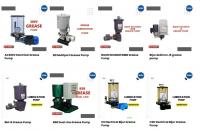
The continuous, uninterrupted operation of industrial machinery is the primary driver of profitability in modern processing plants, mining operations, and manufacturing facilities. Within these demanding environments, equipment components like heavy-duty bearings, rotating gears, and structural joints are subjected to immense mechanical stress, high operational temperatures, and continuous friction. Without regular, precise maintenance, these friction points quickly degrade, leading to mechanical failures and costly, unexpected production shutdowns. While traditional maintenance schedules relied heavily on technicians manually servicing each asset with handheld tools, the scale of modern industrial operations demands a more dependable, hands-free solution. To eliminate maintenance gaps and maximize equipment efficiency, industrial facilities are standardizing their operations around automated machinery, specifically integrating an advanced electric grease pump to handle complex lubrication demands.
The Mechanical Importance of High-Pressure Lubrication
Industrial machinery components rely on a microscopic layer of lubricant to prevent metal-on-metal contact under heavy loads. While oil is commonly used in enclosed, low-temperature systems, heavy-duty industrial components require dense grease. Grease possesses high viscosity, allowing it to stay in place under heavy vibration, resist water washout, and create an external barrier that seals out environmental contaminants like dust, metal shavings, and process moisture.
However, because grease is naturally thick and resistant to movement, forcing it through narrow internal machinery channels requires significant localized force. An automated electric grease pump resolves this engineering challenge by utilizing an integrated motor to drive positive-displacement mechanisms, such as high-pressure reciprocating pistons or rotary gear sets. As the system operates, it draws lubricant out of a sealed storage chamber and pushes it into distribution lines under substantial hydraulic pressure. This continuous, controlled movement replaces irregular manual greasing with an organized, highly measurable delivery workflow.
Technical Specifications and Engineering Adaptability
The successful implementation of an automated lubrication program relies on matching the hardware specifications of the pumping unit to the layout and power availability of the factory floor. Modern automated units are manufactured with multiple electrical configurations to handle varied operating environments. Stationary processing plants, automotive manufacturing centers, and packaging facilities utilize alternating current models configured for 220V single-phase or 380V three-phase power lines, connecting directly to standard facility electrical grids. For mobile applications, field construction equipment, or agricultural machinery, heavy-duty direct current variations operating at 12V or 24V provide the exact same high-pressure output without requiring access to an external power grid.
The performance capabilities of these systems are engineered to withstand severe industrial stress. Industrial models routinely generate maximum output pressures between 15 MPa and 40 MPa, allowing the system to easily overcome line friction in long distribution runs stretching across expansive machine layouts. This high-pressure capability allows the system to seamlessly distribute dense lubricants up to NLGI Grade 2 consistency, performing reliably within challenging environmental temperature zones spanning from -25°C up to +80°C. Reservoir capacities are similarly scalable, ranging from compact 2-liter clear polymer containers for localized equipment up to massive 30-liter, 60-liter, or 100-liter carbon steel storage tanks designed to service extensive facility networks while minimizing refill frequencies.
Maximizing Efficiency with Centralized Distribution Lines
An automated pumping unit reaches its full industrial utility when integrated with centralized distribution networks, such as progressive divider valves or dual-line distribution blocks. This structural arrangement allows a single, centralized pumping station to independently monitor and lubricate anywhere from a few dozen to more than a hundred separate bearings scattered across a complex production line.
In a progressive distribution circuit, the pump directs grease through interlocking metering blocks that divide the lubricant into exact volumetric ratios. The internal pistons of these blocks move in a rigid, sequential order; if a single downstream bearing becomes blocked by hardened grit or debris, the entire progressive sequence stalls immediately. This systemic halt creates a rapid backpressure spike in the main delivery line, which triggers integrated digital pressure sensors. The system then instantly relays a fault code to the master control panel, allowing maintenance teams to address the blockage before mechanical damage occurs. For massive factory layouts where machinery points are separated by great distances, dual-line configurations utilize alternating line pressurization to ensure equal grease distribution without suffering pressure drops.
Eliminating the Operational Vulnerabilities of Manual Labor
Upgrading from manual grease gun routines to automated machinery distribution fundamentally improves a facility's cost efficiency and workplace safety metrics. Manual lubrication naturally creates a volatile "feast or famine" cycle for mechanical components. When an operator manually lubricates a bearing, they typically over-fill the housing, causing internal friction heat, broken bearing seals, and grease leakage. Over the following days, the grease dissipates, leaving the component under-lubricated and exposed to dry wear until the next maintenance cycle.
Automated systems eliminate this destructive pattern by applying microscopic, precisely calculated volumes of fresh grease at consistent intervals while the machine is actively running under normal workload conditions. Lubricating during active operation ensures that the grease is perfectly distributed across all internal rolling elements, creating a constant outward pressure that prevents external dirt, water, and contaminants from entering the housing. Additionally, because technicians no longer need to manually access dangerous, elevated, or hard-to-reach machinery zones—such as overhead crane rails, high-temperature industrial ovens, or confined chemical mixing tanks—workplace safety risks and labor overhead are substantially minimized.
Securing Substantial Long-Term Economic Value
While implementing a comprehensive automated lubrication network requires a higher upfront capital investment than manual tools, the long-term return on investment is achieved rapidly. The primary financial savings come from a dramatic reduction in unscheduled equipment downtime. If a primary production asset fails unexpectedly due to a dry, unlubricated bearing, the resulting production halt can cost an enterprise thousands of dollars per hour in lost throughput and emergency repair labor.
By keeping vital wear surfaces constantly protected, component service life is extended significantly, reducing replacement parts budgets and freeing up maintenance staff for predictive facility analysis. Advanced integrated features—such as low-level float switches, visual level indicators, external overpressure relief valves, and direct digital integration with master plant PLC systems—ensure that any operational anomalies are identified and corrected immediately. Through heavy-duty material construction, precise manufacturing standards, and resilient engineering design, modern automated lubrication infrastructure provides the reliable performance and operational security required to optimize modern industrial productivity.